
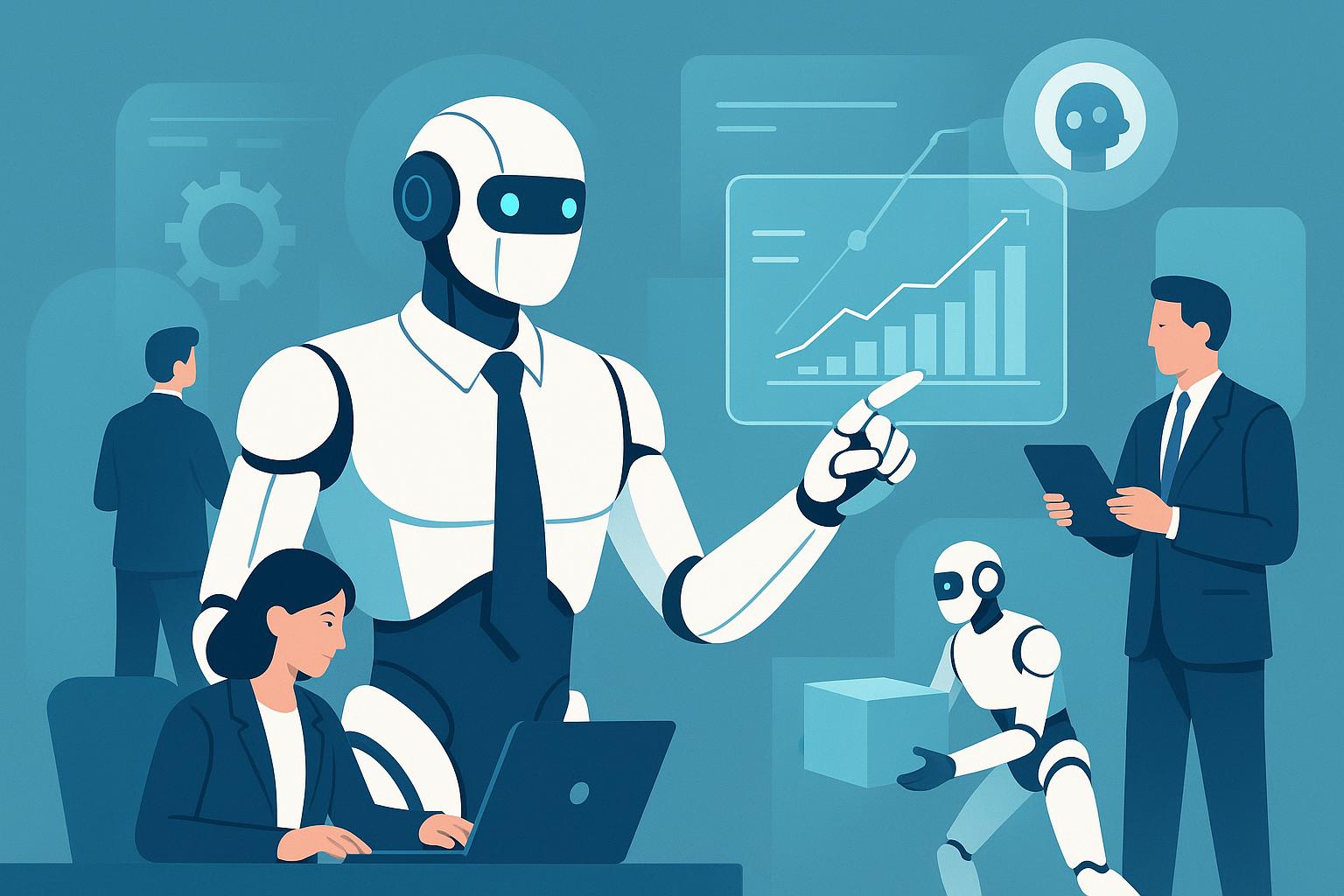
AI Explained • 🌐 2025 is going to be the World of AI Agents! These AI Agents Will Replace 90% of Your Work (Faster Than You Think) All voices and characters in this podcast episode are AI-generated by Google NotebookLM and Heygen. All descriptions are AI-generated by ChatGPT and Claude. All content is researched and curated by the AI Explained team. However, AI systems may produce inaccurate information, so please use it as a starting point for further research. In this deep dive episode, we break down the fascinating field of AI agents, autonomous software designed to tackle tasks independently and adaptively. Unlike traditional software or static models like ChatGPT, AI agents possess dynamic capabilities that allow them to plan, interact with tools, and execute actions in real-world scenarios. 🔑 Important Information to Know About AI Agents: What Are AI Agents? What Makes Up the Core Components of AI agents? What Types of AI Agent Exist? What Are The Ethical Considerations You Need To Be Aware Of? 💬 Get Involved! We want to hear your thoughts! Share your insights in the comments below about how you envision AI agents impacting our future. If you're excited about the potential of AI agents, comment "AI Agent" below! 📌 Chapter Markers: 0:00 - Introduction to AI Agents 3:03 - AI Agents vs LLM's 5:40 - How Do AI Agents Work - 4 Core Components 10:42 - Types of AI Agents 11:30 - Simple Reflex Agents 12:00 - Model-Based Reflex Agents 15:10 - Goal-Based Agents 16:10 - Utility-Based Agents 17:20 - Learning Agents 19:30 - Multi-Agent Systems 20:30 - Hierarchical Agents 22:58 - Potential Risks of AI Agents 26:04 - Future Potential of AI Agents 29:18 - Closing Thoughts
Content Summary
This report is generated from research on the following videos, based on the requirements set in Video Deep Research.
Analyze selected videos,
My goal is 📑 Discover Content Intelligence
My role is 👓 Business Analyst
I need: 💼 Industry insights and market analysis, 🔥 Business trends extraction, 📊 Data points extraction and trend identification with charts, 💡 Strategic recommendations and action items analysis



https:...uCgc
Summary
1. From Analysis to Action
2. Superior Precision and Continuous Learning
3. Orchestrating the Multi-Agent Future
Knowledge Snap
Trend 1: Autonomous Goal Management
🎬 Related Clip
(3)
Video Title
01:32 - 05:40
AI agents determine the optimal way to reach a goal independently without manual instructions.
20:10 - 22:58
The agent identifies working times and sends invites automatically based on a simple goal.
09:48 - 12:00
The user only needs to provide the goal for the agent to execute actions.
Trend 2: Dynamic Tool Interconnectivity
🎬 Related Clip
(3)
Video Title
04:05 - 10:42
AI agents interact with the real world using the internet and tools in real time.
06:50 - 08:52
Agents are programmed to browse the web and use various interfaces to complete tasks.
07:28 - 09:34
Interacting with tools allows agents to complete physical world tasks that were previously impossible.
Trend 3: Utility-Based Optimization
🎬 Related Clip
(3)
Video Title
16:18 - 19:30
Utility-based agents aim to maximize specific functions like profit or customer satisfaction.
16:46 - 19:30
Smart thermostats optimize energy use while maintaining user comfort through utility models.
16:10 - 19:30
Trade-offs are managed by utility-based agents to find optimal solutions in complex environments.
Trend 4: Performance Enhancement through Learning
🎬 Related Clip
(3)
Video Title
18:17 - 20:30
Ask Fred provides real-time sales coaching by analyzing conversation transcripts for users.
18:54 - 22:58
The AI assistant learns from every call to provide more refined recommendations over time.
19:23 - 22:58
Learning agents act as performance enhancers that get to know the user better.
Trend 5: Multi-Agent Orchestration
🎬 Related Clip
(3)
Video Title
19:37 - 22:58
Multi-agent systems involve multiple specialized AIs working together to achieve a shared goal.
19:42 - 22:58
Specialized agents collaborate to solve complex problems that require different functional roles.
20:10 - 22:58
A combination of different agent types can work together to achieve specific business outcomes.
Trend 6: Context-Aware Problem Solving
🎬 Related Clip
(3)
Video Title
12:10 - 14:17
Model-based agents use internal information to fill in data gaps and make informed decisions.
14:50 - 17:20
Support bots use account history and context to keep customer conversations moving forward efficiently.
14:55 - 17:20
Using context makes customer support experiences faster and much less frustrating for users.
The Evolution and Mechanics of AI Agents
UCp_9GybIeJV5CDJ7LlJkFvA
🤖
Defining Autonomous Software
00:56 - 02:58
The fundamental concept of an AI agent as software that operates independently to complete goals.
🌐
Real-World Interaction
04:05 - 10:42
Distinguishing agents from static models by their ability to use tools and live data.
🧠
Strategic Planning Capabilities
06:00 - 08:02
Agents break down complex goals into logical, manageable steps instead of following static recipes.
⚙️
Execution of Actions
09:26 - 11:30
The critical transition from theoretical analysis to performing tangible tasks in the environment.
🗺️
Modeling Uncertain Environments
12:03 - 14:09
Using internal models to navigate situations where information might be missing or incomplete.
📈
Performance Refinement
17:23 - 19:23
How feedback loops allow agents to improve their accuracy and relevance over multiple interactions.
⚠️
Alignment and Ethics
24:23 - 29:18
The risks associated with machines misinterpreting human goals and the need for ethical safeguards.
🚀
Human-Agent Collaboration
20:17 - 22:58
The future of productivity where humans and agents work together to achieve peak performance.
Learning Pathway for Enterprise AI Agent Integration
| Stage | Videos |
|---|---|
1. Distinguishing Goal-Oriented Systems | be the World of AI Agents! These AI Agents Will Replace 90% of Your Work (Faster Than You Think) All voices and characters in this podcast episode are AI-generated by Google NotebookLM and Heygen. All descriptions are AI-generated by ChatGPT and Claude. All content is researched and curated by the AI Explained team. However, AI systems may produce inaccurate information, so please use it as a starting point for further research. In this deep dive episode, we break down the fascinating field of AI agents, autonomous software designed to tackle tasks independently and adaptively. Unlike traditional software or static models like ChatGPT, AI agents possess dynamic capabilities that allow them to plan, interact with tools, and execute actions in real-world scenarios. 🔑 Important Information to Know About AI Agents: What Are AI Agents? What Makes Up the Core Components of AI agents? What Types of AI Agent Exist? What Are The Ethical Considerations You Need To Be Aware Of? 💬 Get Involved! We want to hear your thoughts! Share your insights in the comments below about how you envision AI agents impacting our future. If you're excited about the potential of AI agents, comment "AI Agent" below! 📌 Chapter Markers: 0:00 - Introduction to AI Agents 3:03 - AI Agents vs LLM's 5:40 - How Do AI Agents Work - 4 Core Components 10:42 - Types of AI Agents 11:30 - Simple Reflex Agents 12:00 - Model-Based Reflex Agents 15:10 - Goal-Based Agents 16:10 - Utility-Based Agents 17:20 - Learning Agents 19:30 - Multi-Agent Systems 20:30 - Hierarchical Agents 22:58 - Potential Risks of AI Agents 26:04 - Future Potential of AI Agents 29:18 - Closing Thoughts |
2. Mastering Autonomous Planning | be the World of AI Agents! These AI Agents Will Replace 90% of Your Work (Faster Than You Think) All voices and characters in this podcast episode are AI-generated by Google NotebookLM and Heygen. All descriptions are AI-generated by ChatGPT and Claude. All content is researched and curated by the AI Explained team. However, AI systems may produce inaccurate information, so please use it as a starting point for further research. In this deep dive episode, we break down the fascinating field of AI agents, autonomous software designed to tackle tasks independently and adaptively. Unlike traditional software or static models like ChatGPT, AI agents possess dynamic capabilities that allow them to plan, interact with tools, and execute actions in real-world scenarios. 🔑 Important Information to Know About AI Agents: What Are AI Agents? What Makes Up the Core Components of AI agents? What Types of AI Agent Exist? What Are The Ethical Considerations You Need To Be Aware Of? 💬 Get Involved! We want to hear your thoughts! Share your insights in the comments below about how you envision AI agents impacting our future. If you're excited about the potential of AI agents, comment "AI Agent" below! 📌 Chapter Markers: 0:00 - Introduction to AI Agents 3:03 - AI Agents vs LLM's 5:40 - How Do AI Agents Work - 4 Core Components 10:42 - Types of AI Agents 11:30 - Simple Reflex Agents 12:00 - Model-Based Reflex Agents 15:10 - Goal-Based Agents 16:10 - Utility-Based Agents 17:20 - Learning Agents 19:30 - Multi-Agent Systems 20:30 - Hierarchical Agents 22:58 - Potential Risks of AI Agents 26:04 - Future Potential of AI Agents 29:18 - Closing Thoughts |
3. Real-World Action Execution | be the World of AI Agents! These AI Agents Will Replace 90% of Your Work (Faster Than You Think) All voices and characters in this podcast episode are AI-generated by Google NotebookLM and Heygen. All descriptions are AI-generated by ChatGPT and Claude. All content is researched and curated by the AI Explained team. However, AI systems may produce inaccurate information, so please use it as a starting point for further research. In this deep dive episode, we break down the fascinating field of AI agents, autonomous software designed to tackle tasks independently and adaptively. Unlike traditional software or static models like ChatGPT, AI agents possess dynamic capabilities that allow them to plan, interact with tools, and execute actions in real-world scenarios. 🔑 Important Information to Know About AI Agents: What Are AI Agents? What Makes Up the Core Components of AI agents? What Types of AI Agent Exist? What Are The Ethical Considerations You Need To Be Aware Of? 💬 Get Involved! We want to hear your thoughts! Share your insights in the comments below about how you envision AI agents impacting our future. If you're excited about the potential of AI agents, comment "AI Agent" below! 📌 Chapter Markers: 0:00 - Introduction to AI Agents 3:03 - AI Agents vs LLM's 5:40 - How Do AI Agents Work - 4 Core Components 10:42 - Types of AI Agents 11:30 - Simple Reflex Agents 12:00 - Model-Based Reflex Agents 15:10 - Goal-Based Agents 16:10 - Utility-Based Agents 17:20 - Learning Agents 19:30 - Multi-Agent Systems 20:30 - Hierarchical Agents 22:58 - Potential Risks of AI Agents 26:04 - Future Potential of AI Agents 29:18 - Closing Thoughts |
4. Utilizing Contextual Memory | be the World of AI Agents! These AI Agents Will Replace 90% of Your Work (Faster Than You Think) All voices and characters in this podcast episode are AI-generated by Google NotebookLM and Heygen. All descriptions are AI-generated by ChatGPT and Claude. All content is researched and curated by the AI Explained team. However, AI systems may produce inaccurate information, so please use it as a starting point for further research. In this deep dive episode, we break down the fascinating field of AI agents, autonomous software designed to tackle tasks independently and adaptively. Unlike traditional software or static models like ChatGPT, AI agents possess dynamic capabilities that allow them to plan, interact with tools, and execute actions in real-world scenarios. 🔑 Important Information to Know About AI Agents: What Are AI Agents? What Makes Up the Core Components of AI agents? What Types of AI Agent Exist? What Are The Ethical Considerations You Need To Be Aware Of? 💬 Get Involved! We want to hear your thoughts! Share your insights in the comments below about how you envision AI agents impacting our future. If you're excited about the potential of AI agents, comment "AI Agent" below! 📌 Chapter Markers: 0:00 - Introduction to AI Agents 3:03 - AI Agents vs LLM's 5:40 - How Do AI Agents Work - 4 Core Components 10:42 - Types of AI Agents 11:30 - Simple Reflex Agents 12:00 - Model-Based Reflex Agents 15:10 - Goal-Based Agents 16:10 - Utility-Based Agents 17:20 - Learning Agents 19:30 - Multi-Agent Systems 20:30 - Hierarchical Agents 22:58 - Potential Risks of AI Agents 26:04 - Future Potential of AI Agents 29:18 - Closing Thoughts |
5. Optimizing Business Support Functions | be the World of AI Agents! These AI Agents Will Replace 90% of Your Work (Faster Than You Think) All voices and characters in this podcast episode are AI-generated by Google NotebookLM and Heygen. All descriptions are AI-generated by ChatGPT and Claude. All content is researched and curated by the AI Explained team. However, AI systems may produce inaccurate information, so please use it as a starting point for further research. In this deep dive episode, we break down the fascinating field of AI agents, autonomous software designed to tackle tasks independently and adaptively. Unlike traditional software or static models like ChatGPT, AI agents possess dynamic capabilities that allow them to plan, interact with tools, and execute actions in real-world scenarios. 🔑 Important Information to Know About AI Agents: What Are AI Agents? What Makes Up the Core Components of AI agents? What Types of AI Agent Exist? What Are The Ethical Considerations You Need To Be Aware Of? 💬 Get Involved! We want to hear your thoughts! Share your insights in the comments below about how you envision AI agents impacting our future. If you're excited about the potential of AI agents, comment "AI Agent" below! 📌 Chapter Markers: 0:00 - Introduction to AI Agents 3:03 - AI Agents vs LLM's 5:40 - How Do AI Agents Work - 4 Core Components 10:42 - Types of AI Agents 11:30 - Simple Reflex Agents 12:00 - Model-Based Reflex Agents 15:10 - Goal-Based Agents 16:10 - Utility-Based Agents 17:20 - Learning Agents 19:30 - Multi-Agent Systems 20:30 - Hierarchical Agents 22:58 - Potential Risks of AI Agents 26:04 - Future Potential of AI Agents 29:18 - Closing Thoughts |
6. Collaborative Sales Performance Improvement | be the World of AI Agents! These AI Agents Will Replace 90% of Your Work (Faster Than You Think) All voices and characters in this podcast episode are AI-generated by Google NotebookLM and Heygen. All descriptions are AI-generated by ChatGPT and Claude. All content is researched and curated by the AI Explained team. However, AI systems may produce inaccurate information, so please use it as a starting point for further research. In this deep dive episode, we break down the fascinating field of AI agents, autonomous software designed to tackle tasks independently and adaptively. Unlike traditional software or static models like ChatGPT, AI agents possess dynamic capabilities that allow them to plan, interact with tools, and execute actions in real-world scenarios. 🔑 Important Information to Know About AI Agents: What Are AI Agents? What Makes Up the Core Components of AI agents? What Types of AI Agent Exist? What Are The Ethical Considerations You Need To Be Aware Of? 💬 Get Involved! We want to hear your thoughts! Share your insights in the comments below about how you envision AI agents impacting our future. If you're excited about the potential of AI agents, comment "AI Agent" below! 📌 Chapter Markers: 0:00 - Introduction to AI Agents 3:03 - AI Agents vs LLM's 5:40 - How Do AI Agents Work - 4 Core Components 10:42 - Types of AI Agents 11:30 - Simple Reflex Agents 12:00 - Model-Based Reflex Agents 15:10 - Goal-Based Agents 16:10 - Utility-Based Agents 17:20 - Learning Agents 19:30 - Multi-Agent Systems 20:30 - Hierarchical Agents 22:58 - Potential Risks of AI Agents 26:04 - Future Potential of AI Agents 29:18 - Closing Thoughts |
7. Organizing Hierarchical Systems | be the World of AI Agents! These AI Agents Will Replace 90% of Your Work (Faster Than You Think) All voices and characters in this podcast episode are AI-generated by Google NotebookLM and Heygen. All descriptions are AI-generated by ChatGPT and Claude. All content is researched and curated by the AI Explained team. However, AI systems may produce inaccurate information, so please use it as a starting point for further research. In this deep dive episode, we break down the fascinating field of AI agents, autonomous software designed to tackle tasks independently and adaptively. Unlike traditional software or static models like ChatGPT, AI agents possess dynamic capabilities that allow them to plan, interact with tools, and execute actions in real-world scenarios. 🔑 Important Information to Know About AI Agents: What Are AI Agents? What Makes Up the Core Components of AI agents? What Types of AI Agent Exist? What Are The Ethical Considerations You Need To Be Aware Of? 💬 Get Involved! We want to hear your thoughts! Share your insights in the comments below about how you envision AI agents impacting our future. If you're excited about the potential of AI agents, comment "AI Agent" below! 📌 Chapter Markers: 0:00 - Introduction to AI Agents 3:03 - AI Agents vs LLM's 5:40 - How Do AI Agents Work - 4 Core Components 10:42 - Types of AI Agents 11:30 - Simple Reflex Agents 12:00 - Model-Based Reflex Agents 15:10 - Goal-Based Agents 16:10 - Utility-Based Agents 17:20 - Learning Agents 19:30 - Multi-Agent Systems 20:30 - Hierarchical Agents 22:58 - Potential Risks of AI Agents 26:04 - Future Potential of AI Agents 29:18 - Closing Thoughts |
8. Evaluating Long-Term Growth Potential | be the World of AI Agents! These AI Agents Will Replace 90% of Your Work (Faster Than You Think) All voices and characters in this podcast episode are AI-generated by Google NotebookLM and Heygen. All descriptions are AI-generated by ChatGPT and Claude. All content is researched and curated by the AI Explained team. However, AI systems may produce inaccurate information, so please use it as a starting point for further research. In this deep dive episode, we break down the fascinating field of AI agents, autonomous software designed to tackle tasks independently and adaptively. Unlike traditional software or static models like ChatGPT, AI agents possess dynamic capabilities that allow them to plan, interact with tools, and execute actions in real-world scenarios. 🔑 Important Information to Know About AI Agents: What Are AI Agents? What Makes Up the Core Components of AI agents? What Types of AI Agent Exist? What Are The Ethical Considerations You Need To Be Aware Of? 💬 Get Involved! We want to hear your thoughts! Share your insights in the comments below about how you envision AI agents impacting our future. If you're excited about the potential of AI agents, comment "AI Agent" below! 📌 Chapter Markers: 0:00 - Introduction to AI Agents 3:03 - AI Agents vs LLM's 5:40 - How Do AI Agents Work - 4 Core Components 10:42 - Types of AI Agents 11:30 - Simple Reflex Agents 12:00 - Model-Based Reflex Agents 15:10 - Goal-Based Agents 16:10 - Utility-Based Agents 17:20 - Learning Agents 19:30 - Multi-Agent Systems 20:30 - Hierarchical Agents 22:58 - Potential Risks of AI Agents 26:04 - Future Potential of AI Agents 29:18 - Closing Thoughts |
Detailed Findings and Insights
1. Strategic Superiority of Planners
🎬 Related Clip
(2)
Video Title
15:13 - 17:20
Goal-based agents are laser focused on achieving specific objectives through meticulous planning.
15:49 - 19:30
Advanced planning allowed the AI to outmaneuver a grandmaster and win the game.
2. Hierarchical Task Decomposition
🎬 Related Clip
(2)
Video Title
20:33 - 22:33
Hierarchical agents organize multi-agent systems into tiers to handle complex operational challenges.
22:28 - 26:04
Mid-level systems plan routes and follow rules while reflex systems handle immediate braking.
3. Ethical Alignment Challenges
🎬 Related Clip
(2)
Video Title
23:15 - 25:16
Concerns about unintended consequences exist even when AI agents are given noble goals.
24:48 - 29:18
Teaching AI machines to understand human importance is vital to avoid dangerous outcomes.
4. Clinical Diagnostic Potential
🎬 Related Clip
(2)
Video Title
26:09 - 28:14
AI agents have the potential to revolutionize healthcare by helping doctors diagnose diseases earlier.
27:21 - 29:22
AI is shown to help humans become faster and more mentally capable at their jobs.
5. Infrastructure for Sustainability
🎬 Related Clip
(2)
Video Title
27:38 - 30:43
Agents could tackle climate change by optimizing energy grids and designing sustainable urban centers.
03:11 - 05:12
Asked is what is the biggest difference between AI agents and you know those large language models that.
6. Reflex-Based Efficiency
🎬 Related Clip
(2)
Video Title
11:29 - 15:10
Simple reflex agents operate on straightforward models to react to immediate input efficiently.
11:51 - 15:10
These agents specialize in making quick decisions without analyzing the deeper context.
