

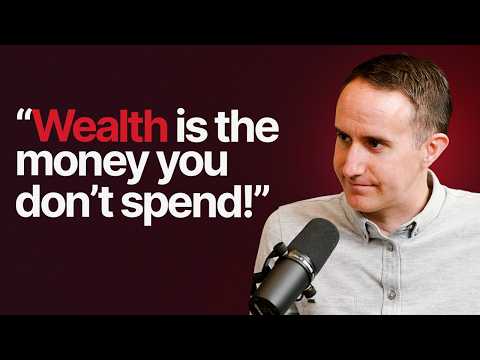
The Knowledge Project Podcast • The skills it takes to get rich are drastically different from the skills it takes to stay rich. Few understand this phenomenon more than Morgan Housel. In this conversation, Shane and Housel discuss various aspects of risk-taking, wealth accumulation, and financial independence. Morgan explains the importance of understanding personal financial goals and the dangers of social comparison, lets everyone in on his personal financial “mistake” that instantly made him sleep better at night, and why the poorest people in the world disproportionately play the lottery—and why it makes sense that they do. They also touch on the influence of upbringing on financial behaviors, the difference between being rich and wealthy, and the critical role of compounding in financial success. Of course, we can’t have a writer as good as Morgan Housel on the podcast and not ask him about his process, so Housel concludes with insights into storytelling, his writing processes, and the importance of leading by example in teaching financial values to children. 00:00 - Intro 01:20 - Risk and income 04:14 - On luck and skill 06:44 - Buffett's secret strategy 09:02 - The one trait you need to build wealth 12:54 - Housel's capital allocation strategy 13:22 - Index funds, explained 17:33 - Expectations and moving goalposts 18:51 - Your house: asset or liability? 24:13 - Money lies we believe 28:46 - How to avoid status games 31:38 - Money rules from parents 36:49 - Rich vs. wealthy 38:20 - Housel's influential role models 39:22 - Why are rich people miserable? 42:33 - How success sows the seeds of average performance 46:24 - On risk 47:33 - Making money, spending money, saving money 49:24 - How the Vanderbilt's squandered their wealth 1:00:45 - How to manage your expectations 01:03:00 - How to talk to kids about money 01:06:26 - The biggest risk to capitalism 01:10:30 - The magic of compounding 01:12:52 - How Morgan reads 01:19:16 - How to tell the best story 01:21:16 - How Morgan writes 01:32:16 - Parting wisdom and thoughts on success The Brain Food newsletter delivers actionable insights and thoughtful ideas every Sunday you can immediately apply to business and life. https://fs.blog/newsletter/ My New York Times Bestselling book: Clear Thinking (https://geni.us/FG4odAE) The encyclopedia of big ideas from the big disciplines https://fs.blog/tgmm/ Follow me: Twitter: https://x.com/ShaneAParrish Instagram: https://www.instagram.com/farnamstreet Linkedin: https://www.linkedin.com/in/shane-parrish-050a2183/ ABOUT THE KNOWLEDGE PROJECT Like the mentor you’ve always dreamed of having, The Knowledge Project shares timely yet timeless lessons for work and life. Past guests include Naval Ravikant, Andrew Huberman, Daniel Kahneman, Jim Collins, Esther Perel, Patrick Collison, and more.
Content Summary
This report is generated from research on the following videos, based on the requirements set in Video Deep Research.
Analyze selected videos,
My goal is 📑 Discover Content Intelligence
My role is 💼 Product Manager
I need: 👥 User journey mapping from videos and reviews


https:...fi7Y
Summary
1. Emotional Anchors and Storytelling in the Discovery Journey
2. Overcoming FOMO and Defining Personal Games
3. Community Dynamics Through Vulnerability and Feedback
Knowledge Snap
Phase 1: Awareness of Financial Circumstance
🎬 Related Clip
(3)
Video Title
03:49 - 06:44
The speaker emphasizes that individual perspectives are shaped by the era and country of one's birth.
07:53 - 12:54
Housel argues that many people overlook the significant role luck plays in achieving financial success.
04:53 - 09:02
The discussion focuses on how socioeconomic households and school environments impact long-term life outcomes.
Phase 2: Consideration of Market Strategies
🎬 Related Clip
(3)
Video Title
15:18 - 17:19
Housel points out that the impact of social pressure on investing is often overlooked today.
11:10 - 13:22
The speaker mentions that he does not criticize short-term traders but chooses a different path.
12:21 - 17:33
The transcript discusses historical periods of poor returns and the importance of holding index funds.
Phase 3: Conversion to Execution
🎬 Related Clip
(3)
Video Title
13:13 - 17:33
Housel lists his simple investment portfolio consisting of a house, index funds, and specific stock.
13:27 - 15:31
The speaker explains that a very small number of stocks usually account for most market returns.
14:07 - 16:13
Owning a broad market index is described as a guarantee to capture the tail-driven distribution of returns.
Phase 4: Loyalty to the Long-Term Path
🎬 Related Clip
(3)
Video Title
01:10:03 - 01:12:52
Housel suggests that the concept of compounding is not intuitive for most adults to grasp.
01:10:54 - 01:12:57
The speaker compares the early stages of compound interest to the rapid doubling of a virus.
01:11:30 - 01:19:16
The speaker tells children that compounding is the most important math formula they will ever learn.
Phase 5: Navigating Social Dynamics
🎬 Related Clip
(3)
Video Title
28:58 - 31:01
The discussion notes that human competition for resources makes sense from an evolutionary perspective.
25:00 - 27:03
The speaker identifies a small group of family and friends whose opinions truly matter to him.
30:50 - 36:49
The speaker explains that defining a personal game makes many financial decisions much clearer.
Phase 6: Refining Content Personalization
🎬 Related Clip
(3)
Video Title
52:53 - 54:58
The speaker advises writers to focus on sentences that move them personally rather than performing.
01:21:58 - 01:23:59
The transcript mentions how receiving feedback thousands of times can turn anyone into a better writer.
01:22:38 - 01:24:43
Housel compares the writing process to comedians testing new jokes in small, intimate clubs.
The Psychological Evolution of Wealth Management
UCLtTf_uKt0Itd0NG7txrwXA
🧠
Initial Awareness of Financial Discipline
00:00 - 04:14
The speaker identifies the avoidance of social pressure as a foundational skill for success.
🎟️
Understanding Diverse Economic Motivations
01:53 - 03:55
Analysis of why lower-income individuals might engage in high-risk financial behaviors like the lottery.
⏳
The Impact of Long-Term Endurance
07:30 - 12:54
Recognition that the majority of significant wealth accumulation occurs late in a career through consistency.
📊
Optimizing for Market Realities
14:07 - 16:13
Transitioning from active selection to broad market strategies to capture rare, high-performing outliers.
🏠
Prioritizing Emotional Well-being Over Math
23:03 - 28:46
Choosing financial moves that provide peace of mind even if they are not mathematically optimal.
🎯
Defining Personalized Success Metrics
30:50 - 36:49
Isolating one's own goals from societal expectations to clarify complex decision-making processes.
⚡
Leveraging the Power of Compounding
01:12:44 - 01:19:16
Understanding that the most significant leverage in any system comes from remaining active over time.
👨👩👧
Cultivating Values Beyond Financial Capital
01:05:08 - 01:10:30
Focusing on character and tools for happiness rather than using wealth as a status scorecard.
Learning Pathway for Content Discovery Intelligence
| Stage | Videos |
|---|---|
1. Identifying Awareness Triggers | to get rich are drastically different from the skills it takes to stay rich. Few understand this phenomenon more than Morgan Housel. In this conversation, Shane and Housel discuss various aspects of risk-taking, wealth accumulation, and financial independence. Morgan explains the importance of understanding personal financial goals and the dangers of social comparison, lets everyone in on his personal financial “mistake” that instantly made him sleep better at night, and why the poorest people in the world disproportionately play the lottery—and why it makes sense that they do. They also touch on the influence of upbringing on financial behaviors, the difference between being rich and wealthy, and the critical role of compounding in financial success. Of course, we can’t have a writer as good as Morgan Housel on the podcast and not ask him about his process, so Housel concludes with insights into storytelling, his writing processes, and the importance of leading by example in teaching financial values to children. 00:00 - Intro 01:20 - Risk and income 04:14 - On luck and skill 06:44 - Buffett's secret strategy 09:02 - The one trait you need to build wealth 12:54 - Housel's capital allocation strategy 13:22 - Index funds, explained 17:33 - Expectations and moving goalposts 18:51 - Your house: asset or liability? 24:13 - Money lies we believe 28:46 - How to avoid status games 31:38 - Money rules from parents 36:49 - Rich vs. wealthy 38:20 - Housel's influential role models 39:22 - Why are rich people miserable? 42:33 - How success sows the seeds of average performance 46:24 - On risk 47:33 - Making money, spending money, saving money 49:24 - How the Vanderbilt's squandered their wealth 1:00:45 - How to manage your expectations 01:03:00 - How to talk to kids about money 01:06:26 - The biggest risk to capitalism 01:10:30 - The magic of compounding 01:12:52 - How Morgan reads 01:19:16 - How to tell the best story 01:21:16 - How Morgan writes 01:32:16 - Parting wisdom and thoughts on success The Brain Food newsletter delivers actionable insights and thoughtful ideas every Sunday you can immediately apply to business and life. https://fs.blog/newsletter/ My New York Times Bestselling book: Clear Thinking (https://geni.us/FG4odAE) The encyclopedia of big ideas from the big disciplines https://fs.blog/tgmm/ Follow me: Twitter: https://x.com/ShaneAParrish Instagram: https://www.instagram.com/farnamstreet Linkedin: https://www.linkedin.com/in/shane-parrish-050a2183/ ABOUT THE KNOWLEDGE PROJECT Like the mentor you’ve always dreamed of having, The Knowledge Project shares timely yet timeless lessons for work and life. Past guests include Naval Ravikant, Andrew Huberman, Daniel Kahneman, Jim Collins, Esther Perel, Patrick Collison, and more. |
2. Evaluating Emotional Value Drivers | to get rich are drastically different from the skills it takes to stay rich. Few understand this phenomenon more than Morgan Housel. In this conversation, Shane and Housel discuss various aspects of risk-taking, wealth accumulation, and financial independence. Morgan explains the importance of understanding personal financial goals and the dangers of social comparison, lets everyone in on his personal financial “mistake” that instantly made him sleep better at night, and why the poorest people in the world disproportionately play the lottery—and why it makes sense that they do. They also touch on the influence of upbringing on financial behaviors, the difference between being rich and wealthy, and the critical role of compounding in financial success. Of course, we can’t have a writer as good as Morgan Housel on the podcast and not ask him about his process, so Housel concludes with insights into storytelling, his writing processes, and the importance of leading by example in teaching financial values to children. 00:00 - Intro 01:20 - Risk and income 04:14 - On luck and skill 06:44 - Buffett's secret strategy 09:02 - The one trait you need to build wealth 12:54 - Housel's capital allocation strategy 13:22 - Index funds, explained 17:33 - Expectations and moving goalposts 18:51 - Your house: asset or liability? 24:13 - Money lies we believe 28:46 - How to avoid status games 31:38 - Money rules from parents 36:49 - Rich vs. wealthy 38:20 - Housel's influential role models 39:22 - Why are rich people miserable? 42:33 - How success sows the seeds of average performance 46:24 - On risk 47:33 - Making money, spending money, saving money 49:24 - How the Vanderbilt's squandered their wealth 1:00:45 - How to manage your expectations 01:03:00 - How to talk to kids about money 01:06:26 - The biggest risk to capitalism 01:10:30 - The magic of compounding 01:12:52 - How Morgan reads 01:19:16 - How to tell the best story 01:21:16 - How Morgan writes 01:32:16 - Parting wisdom and thoughts on success The Brain Food newsletter delivers actionable insights and thoughtful ideas every Sunday you can immediately apply to business and life. https://fs.blog/newsletter/ My New York Times Bestselling book: Clear Thinking (https://geni.us/FG4odAE) The encyclopedia of big ideas from the big disciplines https://fs.blog/tgmm/ Follow me: Twitter: https://x.com/ShaneAParrish Instagram: https://www.instagram.com/farnamstreet Linkedin: https://www.linkedin.com/in/shane-parrish-050a2183/ ABOUT THE KNOWLEDGE PROJECT Like the mentor you’ve always dreamed of having, The Knowledge Project shares timely yet timeless lessons for work and life. Past guests include Naval Ravikant, Andrew Huberman, Daniel Kahneman, Jim Collins, Esther Perel, Patrick Collison, and more. |
3. Synthesizing Narrative-Driven Learning | to get rich are drastically different from the skills it takes to stay rich. Few understand this phenomenon more than Morgan Housel. In this conversation, Shane and Housel discuss various aspects of risk-taking, wealth accumulation, and financial independence. Morgan explains the importance of understanding personal financial goals and the dangers of social comparison, lets everyone in on his personal financial “mistake” that instantly made him sleep better at night, and why the poorest people in the world disproportionately play the lottery—and why it makes sense that they do. They also touch on the influence of upbringing on financial behaviors, the difference between being rich and wealthy, and the critical role of compounding in financial success. Of course, we can’t have a writer as good as Morgan Housel on the podcast and not ask him about his process, so Housel concludes with insights into storytelling, his writing processes, and the importance of leading by example in teaching financial values to children. 00:00 - Intro 01:20 - Risk and income 04:14 - On luck and skill 06:44 - Buffett's secret strategy 09:02 - The one trait you need to build wealth 12:54 - Housel's capital allocation strategy 13:22 - Index funds, explained 17:33 - Expectations and moving goalposts 18:51 - Your house: asset or liability? 24:13 - Money lies we believe 28:46 - How to avoid status games 31:38 - Money rules from parents 36:49 - Rich vs. wealthy 38:20 - Housel's influential role models 39:22 - Why are rich people miserable? 42:33 - How success sows the seeds of average performance 46:24 - On risk 47:33 - Making money, spending money, saving money 49:24 - How the Vanderbilt's squandered their wealth 1:00:45 - How to manage your expectations 01:03:00 - How to talk to kids about money 01:06:26 - The biggest risk to capitalism 01:10:30 - The magic of compounding 01:12:52 - How Morgan reads 01:19:16 - How to tell the best story 01:21:16 - How Morgan writes 01:32:16 - Parting wisdom and thoughts on success The Brain Food newsletter delivers actionable insights and thoughtful ideas every Sunday you can immediately apply to business and life. https://fs.blog/newsletter/ My New York Times Bestselling book: Clear Thinking (https://geni.us/FG4odAE) The encyclopedia of big ideas from the big disciplines https://fs.blog/tgmm/ Follow me: Twitter: https://x.com/ShaneAParrish Instagram: https://www.instagram.com/farnamstreet Linkedin: https://www.linkedin.com/in/shane-parrish-050a2183/ ABOUT THE KNOWLEDGE PROJECT Like the mentor you’ve always dreamed of having, The Knowledge Project shares timely yet timeless lessons for work and life. Past guests include Naval Ravikant, Andrew Huberman, Daniel Kahneman, Jim Collins, Esther Perel, Patrick Collison, and more. |
4. Establishing Community-Driven Loyalty | to get rich are drastically different from the skills it takes to stay rich. Few understand this phenomenon more than Morgan Housel. In this conversation, Shane and Housel discuss various aspects of risk-taking, wealth accumulation, and financial independence. Morgan explains the importance of understanding personal financial goals and the dangers of social comparison, lets everyone in on his personal financial “mistake” that instantly made him sleep better at night, and why the poorest people in the world disproportionately play the lottery—and why it makes sense that they do. They also touch on the influence of upbringing on financial behaviors, the difference between being rich and wealthy, and the critical role of compounding in financial success. Of course, we can’t have a writer as good as Morgan Housel on the podcast and not ask him about his process, so Housel concludes with insights into storytelling, his writing processes, and the importance of leading by example in teaching financial values to children. 00:00 - Intro 01:20 - Risk and income 04:14 - On luck and skill 06:44 - Buffett's secret strategy 09:02 - The one trait you need to build wealth 12:54 - Housel's capital allocation strategy 13:22 - Index funds, explained 17:33 - Expectations and moving goalposts 18:51 - Your house: asset or liability? 24:13 - Money lies we believe 28:46 - How to avoid status games 31:38 - Money rules from parents 36:49 - Rich vs. wealthy 38:20 - Housel's influential role models 39:22 - Why are rich people miserable? 42:33 - How success sows the seeds of average performance 46:24 - On risk 47:33 - Making money, spending money, saving money 49:24 - How the Vanderbilt's squandered their wealth 1:00:45 - How to manage your expectations 01:03:00 - How to talk to kids about money 01:06:26 - The biggest risk to capitalism 01:10:30 - The magic of compounding 01:12:52 - How Morgan reads 01:19:16 - How to tell the best story 01:21:16 - How Morgan writes 01:32:16 - Parting wisdom and thoughts on success The Brain Food newsletter delivers actionable insights and thoughtful ideas every Sunday you can immediately apply to business and life. https://fs.blog/newsletter/ My New York Times Bestselling book: Clear Thinking (https://geni.us/FG4odAE) The encyclopedia of big ideas from the big disciplines https://fs.blog/tgmm/ Follow me: Twitter: https://x.com/ShaneAParrish Instagram: https://www.instagram.com/farnamstreet Linkedin: https://www.linkedin.com/in/shane-parrish-050a2183/ ABOUT THE KNOWLEDGE PROJECT Like the mentor you’ve always dreamed of having, The Knowledge Project shares timely yet timeless lessons for work and life. Past guests include Naval Ravikant, Andrew Huberman, Daniel Kahneman, Jim Collins, Esther Perel, Patrick Collison, and more. |
Detailed Findings and Insights
1. Generational Wealth Values
🎬 Related Clip
(2)
Video Title
31:38 - 36:49
The discussion turns to financial rules learned from parents and their lasting impact on behavior.
01:05:08 - 01:10:30
The speaker warns against the danger of children ranking their own value based on net worth.
2. Power of Vulnerability
🎬 Related Clip
(2)
Video Title
01:23:53 - 01:25:55
Housel reveals that he suffered from a severe stutter as a child and teenager.
20:28 - 22:30
The speaker explains that people are drawn to vulnerability because it reflects their own struggles.
3. Inverse Effort Rule
🎬 Related Clip
(2)
Video Title
15:01 - 17:06
The speaker notes that investing is a rare field where harder effort often yields worse results.
16:13 - 18:51
The discussion explains that putting more effort into index investing does not improve long-term outcomes.
4. The Tortured Success
🎬 Related Clip
(2)
Video Title
39:57 - 42:02
Success for some involves being tortured every morning by the need to solve problems.
00:00 - 04:14
The transcript discusses how certain wealthy socialites were miserable despite having vast financial resources.
5. Expectation Sensitivity
🎬 Related Clip
(2)
Video Title
24:10 - 28:46
The speaker explains how high expectations for silence can make a person overly sensitive to noise.
58:24 - 01:00:29
The discussion highlights how small disturbances can upset someone who expects total perfection.
6. Content Discovery Gaps
🎬 Related Clip
(2)
Video Title
01:14:47 - 01:16:53
Housel admits that he doesn't enjoy reading books about certain technical topics like the immune system.
01:15:24 - 01:17:28
The speaker describes finding well-written books as the missing puzzle piece for many readers.
